
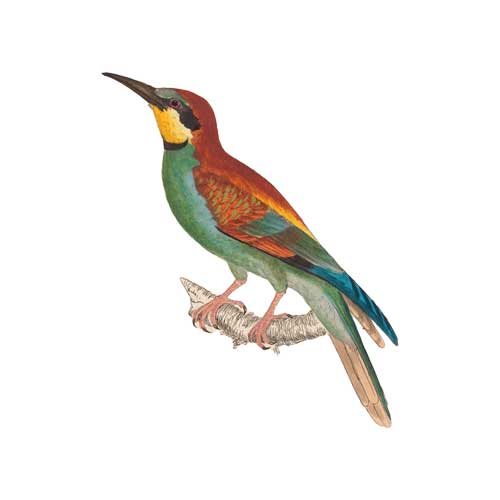
Bee-eater
- Free delivery for purchases over 60€ with DHL Parcel Connect
- Delivery within 3-5 working days
- 14 day return policy
- Customer services open weekdays 8:30-17:00 | +46 (0)431 76800 | info@wildlifegarden.se
- 20 years' expertise in designing, producing and delivering artisanal homeware.
- PopulationBee-eaters nest anywhere from Mongolia in the east to Spain in the west. It is difficult to determine their numbers, but their population is estimated to be between three and six million individuals.
- Maximum age:About 7 years.
- Eggs and clutches:Usually 5–7 eggs, which are incubated by both sexes.
- Latin name:Merops apiaster
Description
Description:
A slender, colourful bird that lives and travels in colonies. They nest close to the ground, but you often spot them in the air, sitting on a wire or swiftly flying around in circles like a swallow.
Appearance:
The bee-eater does not skimp on colours. It has a turquoise belly, yellow chest and back, and a rust-coloured head and wing part. It is between 25 and 30 centimetres long.
Similar Birds:
There are about thirty species in the large bee-eater family. They all have similar body shapes and flight patterns. It is sometimes confused with the green bee-eater in parts of Asia and Africa. The European bee-eater is the only species present in Europe.
Sounds and Songs:
From flying flocks, you can hear the melodic, slightly quivering lullaby. Although there is only one stanza, they repeat it frequently.
Diet:
As the name suggests, flying insects are at the top of the menu. In mid-flight, it pinches the wings off of bees and wasps and removes the stingers by rubbing the insect on a rock.
Nest:
The bee-eater prefers to settle in open landscapes where plenty of plants attract insects. It digs out a nest in a dirt embankment or sandbank, preferably with other bee-eaters in small colonies and often in the company of sand martins.
Geographic Range:
Bee-eaters have a wide geographical range and are summer visitors in large parts of Asia and Europe, sometimes as far north as southern Scandinavia. They spend their winters in Western- and Southern Africa.
 Summer  Resident  Winter | 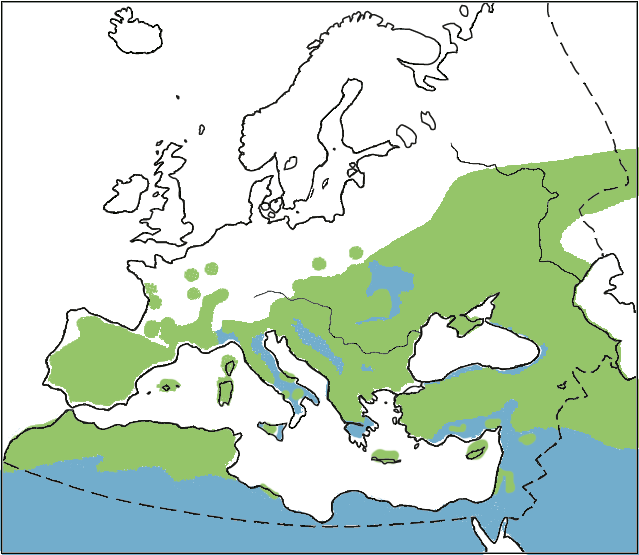 |