
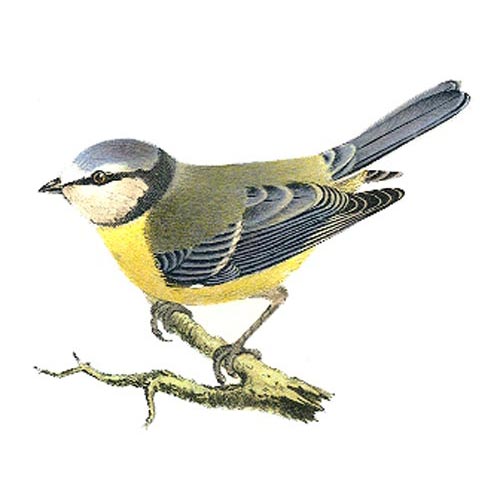
Blue tit
€0
The blue tit is extremely irritable and persistent. Once it has decided what it wants it will not let itself be run off without a proper fight.
- Free delivery for purchases over 60€ with DHL Parcel Connect
- Delivery within 3-5 working days
- 14 day return policy
- Customer services open weekdays 8:30-17:00 | +46 (0)431 76800 | info@wildlifegarden.se
- 20 years' expertise in designing, producing and delivering artisanal homeware.
- Maximum age:12 years
- Eggs and clutches:Incubation two weeks. 8 - 16 eggs
- Latin name:Cyanistes caeruleus
Description
The blue tit is extremely irritable and persistent. Once it has decided what it wants, it will not let itself be run off without a proper fight. During the mating season, both the male and the female raise the feathers on their crowns, which stand as a small blue crest. Even before the mating season, the male feeds the female, something he continues doing once she has started brooding on the eggs. The blue tit has, for reasons unknown, markedly increased its numbers since 1985. During the last 30 years, there has also been an expansion in its breeding area in the north of Europe.
The blue tit is often sighted at tables. They tend to visit them in the winter when it pecks at tallow and eats seeds rich in oil and bread. The winter diet also consists of seeds from birch trees and rowanberries, etc.
The blue tits make some of the largest families of the small birds; up to 16 eggs are not unusual. Since the large broods litter the hollows, they will often move from one hollow to another when they lay eggs for the second brood of the season, as the hollows need to be aired out. The next year it is, however, fit for use again. Even though it likes to nest in boxes, it will also seek out vacant hollows in trees and cracks in mountainsides. The nest consists of wool, hair and a couple of feathers built on a base of moss, always built solely by the female, assisted by the male.
Appearance
The blue tit is smaller than the great tit. The crown is of a sky blue colour, and the face is mostly white with a black band across the eyes.Similar bird
The great tit is larger and has a black crown and chin.Sounds and song
Very varied.| Song |
Food and bird tables
Common guest at the bird table.The blue tit is often sighted at tables. They tend to visit them in the winter when it pecks at tallow and eats seeds rich in oil and bread. The winter diet also consists of seeds from birch trees and rowanberries, etc.
The nest and hollows
Likes to nest in hollows.The blue tits make some of the largest families of the small birds; up to 16 eggs are not unusual. Since the large broods litter the hollows, they will often move from one hollow to another when they lay eggs for the second brood of the season, as the hollows need to be aired out. The next year it is, however, fit for use again. Even though it likes to nest in boxes, it will also seek out vacant hollows in trees and cracks in mountainsides. The nest consists of wool, hair and a couple of feathers built on a base of moss, always built solely by the female, assisted by the male.
Distribution
 Summer Summer Resident Resident Winter Winter | 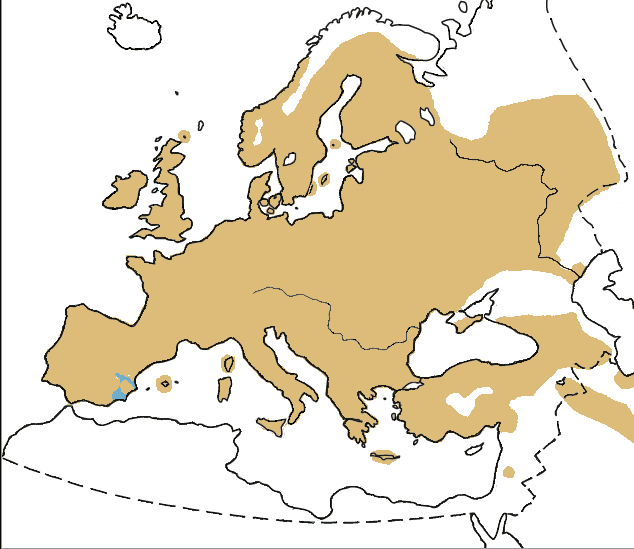 |