
Eastern Rosella
- Free delivery for purchases over 60€ with DHL Parcel Connect
- Delivery within 3-5 working days
- 14 day return policy
- Customer services open weekdays 8:30-17:00 | +46 (0)431 76800 | info@wildlifegarden.se
- 20 years' expertise in designing, producing and delivering artisanal homeware.
- PopulationVery common and increasing in numbers within its range.
- Maximum age:15-20 years.
- Eggs and clutches:5-9 eggs.
- Latin name:Platycercus eximius
Description
Description
In southeastern Australia's farmland or sparse forests, the Eastern rosella is abundant and eye-catching with its bright colours. It is often kept as a caged bird. The male and female stay together for life. It is one of Australia's 56 parrot species.
Appearance
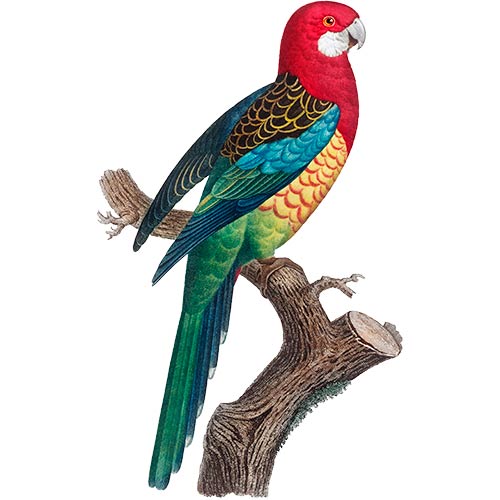
The Eastern rosella is about 30 centimetres long and has a head with white cheeks. The belly is bright yellow, and the long tail is green-blue, as are the wings. The back is striped in yellow-black. The white beak is another characteristic.
Similar bird
The white-cheeked rosella has the same white cheek patches as the Eastern rosella, but its head is yellow.
Sounds and songs
In flight, it makes sharp, one—or two-syllable calls; from the trees, it can chatter in longer phrases and occasionally whistle.
Diet
Plants and seeds from many species, including eucalyptus. Insects are also part of the diet. Fruit growers are not happy about the plundering of fruit trees.
Nest
The Eastern rosella prefers to nest in a cavity in a eucalyptus tree, but holes in other types of trees, wooden poles, or on the ground can also work.
Geographic range
It lives in the southeastern corner of Australia.
 Summer Summer Resident Resident Winter Winter | 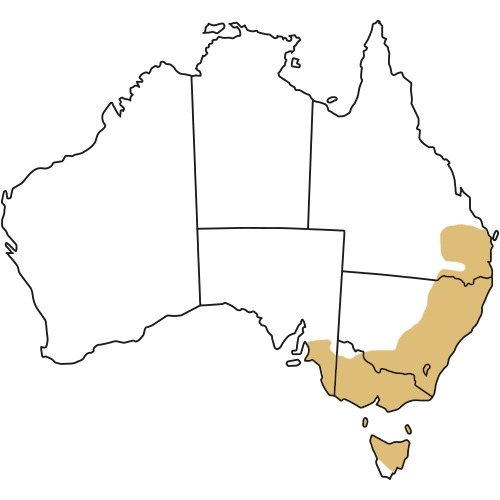 |