
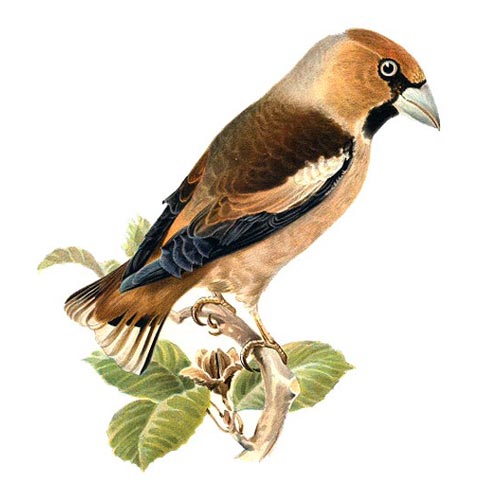
Hawfinch
€0
The hawfinch is the largest of our finches, and its beak is so strong it can crack the stones in cherries.
- Free delivery for purchases over 60€ with DHL Parcel Connect
- Delivery within 3-5 working days
- 14 day return policy
- Customer services open weekdays 8:30-17:00 | +46 (0)431 76800 | info@wildlifegarden.se
- 20 years' expertise in designing, producing and delivering artisanal homeware.
- Maximum age:10 years
- Eggs and clutches:Incubation 12 - 13 days. 5 eggs
- Latin name:Coccothraustes coccothraustes
Description
The hawfinch is the largest of our finches, and its beak is so strong it can crack the stones in cherries. The bird is rather shy and will stay at the tops of trees.
In the wintertime, it sometimes ventures out to be a table guest.
Appearance
A hawfinch looks like a heavily set finch and is recognizable by its massive, pointed beak. The head, abdomen and belly are light brownish red, the neck is grey, the back is warm, dark brown, and the throat is black.Similar bird
The bohemian waxwing has a crest on its head and a smaller beak.Sounds and song
The hawfinch makes a sharp, clicking sound, varied with a blackbird-like hum.| Contact Call |
Food and bird tables
They will visit the bird feeder from time to time.In the wintertime, it sometimes ventures out to be a table guest.
The nest and hollows
Even though the female is the primary nester, the male will participate initially. The nest is large and placed in a forked branch, often in a deciduous tree. The nest itself is a collection of twigs.Distribution
 Summer Summer Resident Resident Winter Winter | 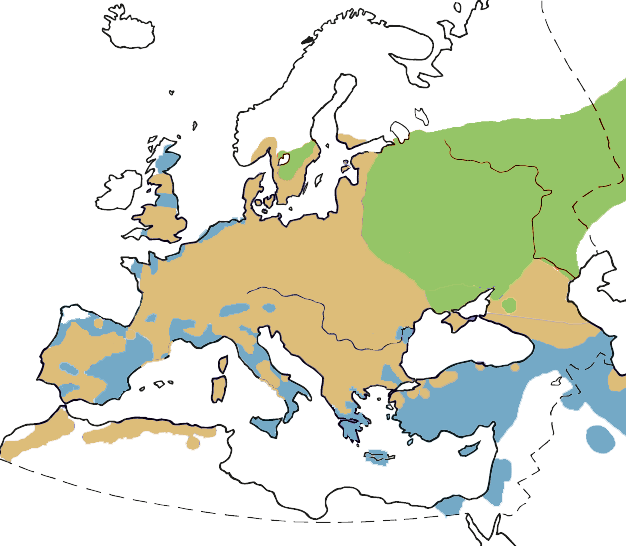 |