
Mallard
€0
Mallards can be very fearless. They visit built-up areas and towns and can be found just about anywhere there is water.
- Free delivery for purchases over 60€ with DHL Parcel Connect
- Delivery within 3-5 working days
- 14 day return policy
- Customer services open weekdays 8:30-17:00 | +46 (0)431 76800 | info@wildlifegarden.se
- 20 years' expertise in designing, producing and delivering artisanal homeware.
- Maximum age:25 years
- Eggs and clutches:Incubation 11 - 14 days. 4 - 6 eggs.
- Latin name:Anas Platyrhynchos
Description
Mallards can be very fearless. They visit built-up areas and towns and can be found just about anywhere there is water, such as parks, lakes, and the sea.
Mallards are dabbling ducks. They might not be excellent divers, but they do have the ability to turn upside down to feed below the surface of the water. When they do this, you can just see their tails sticking up out of the water.
Mallards are dabbling ducks. They might not be excellent divers, but they do have the ability to turn upside down to feed below the surface of the water. When they do this, you can just see their tails sticking up out of the water.
Appearance
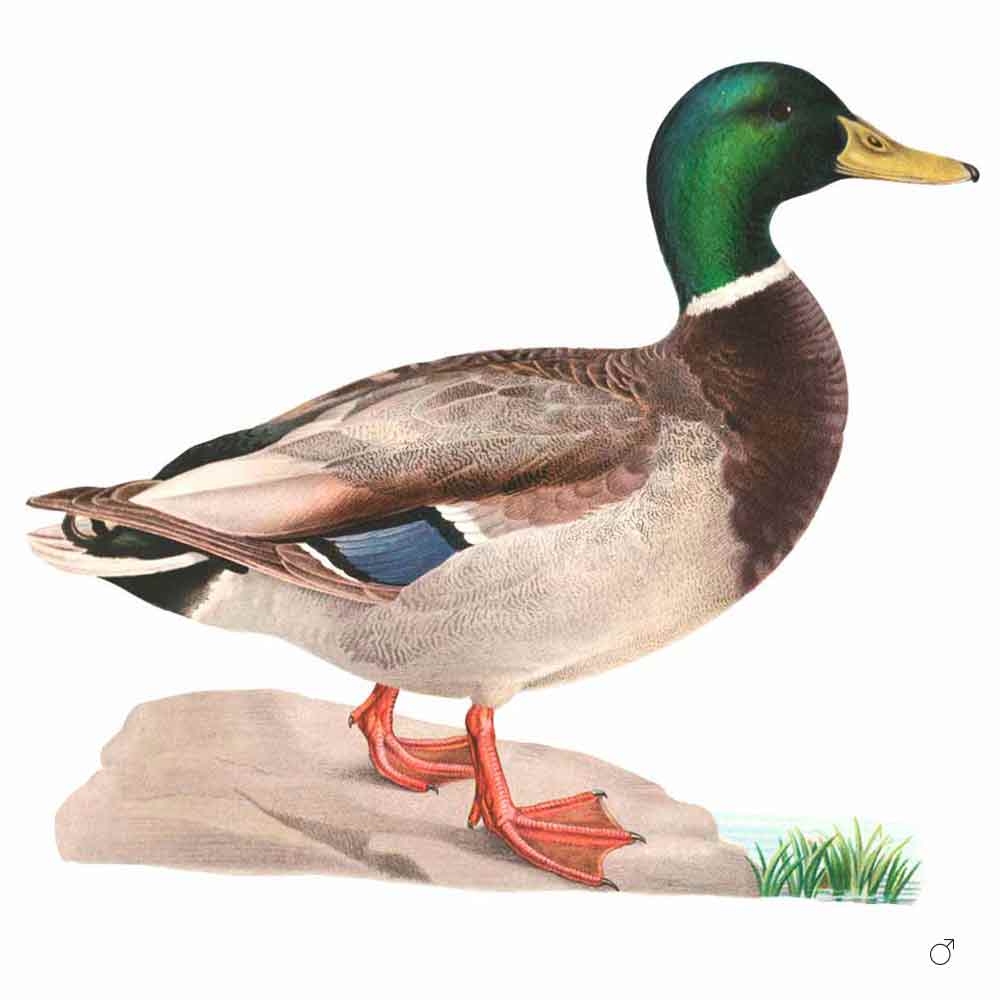
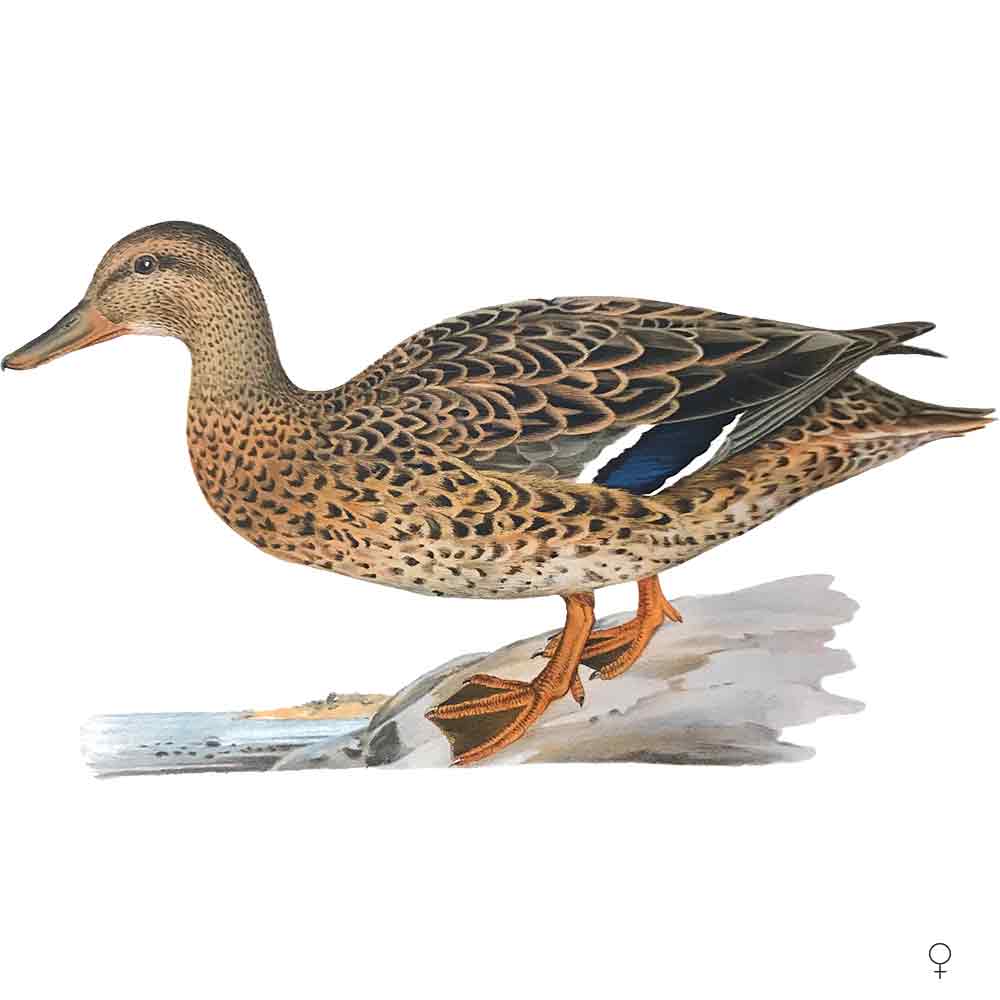
The breeding male mallard is unmistakable. The characteristic dark green head with the white collar is the most distinguishing feature. The breast is chestnut brown and the bill is yellow while the back and the belly are light grey. The tail, with its fancily curled feathers in the middle, is black. The female has speckled brown feathers and is not as easy to recognise as the male. The bill is more orange. The ducklings are similar in colouring to the adult female. Both the male and the female do, however, have blue speculum on their wings, which you can see when they unfold them.Similar bird
The female can be mistaken for other female species of ducks such as the teal, although the teal is much smaller.Sounds and song
Both the male and the female have rather a husky quack, although the female is louder than the male.| Female |
Male |
Food
Mallards eat just about everything from small water creatures to bread and seeds. They graze on plants that grow both in the water and on land.The nest and hollows
It is the female mallards that build the nests and while they usually build them on the ground close to water, they occasionally build them higher up, in old crows’ nests for example. Mallards lay their egg early in the season, which gives them a second chance to lay eggs should, for any reason, they fail the first time round.Distribution
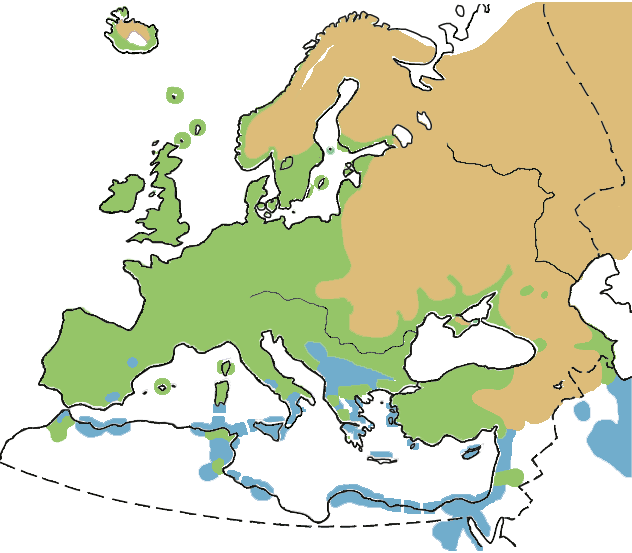
 Summer Summer Resident Resident Winter Winter |
 |