
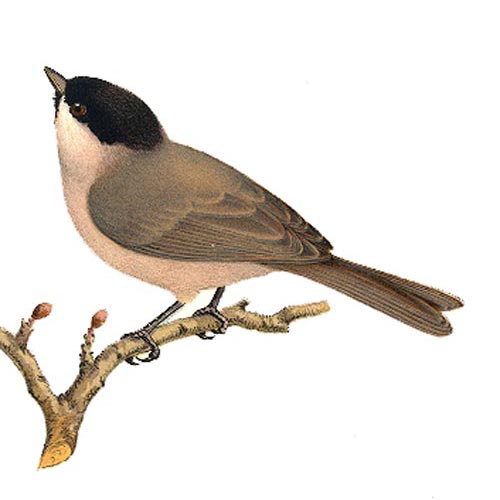
Marsh tit
€0
Marsh tits are very nice to have around bird tables.
- Free delivery for purchases over 60€ with DHL Parcel Connect
- Delivery within 3-5 working days
- 14 day return policy
- Customer services open weekdays 8:30-17:00 | +46 (0)431 76800 | info@wildlifegarden.se
- 20 years' expertise in designing, producing and delivering artisanal homeware.
- Maximum age:12 years
- Eggs and clutches:Incubation two weeks. 7 - 9 eggs, often two clutches.
- Latin name:Poecile palustris
Description
Marsh tits are very nice to have around bird tables. They will sweep around right above the ground uninterruptedly, pleasantly chattering and completely unafraid. They may settle on the table as you fill it up with seeds. However, they are much less pleasant if someone approaches a nesting box they have decided to occupy. Intruders, be they cats or humans, will get their ears warmed. If you meet a couple of marsh tits, because you will often come upon them in pairs, you are most certainly on their”home turf”. The marsh tit is very fond of its home and will stay in the same area its entire life.
The marsh tit lives off insects, as well seeds from herbs and grass.
Appearance
A small tit that looks like the willow tit but is most easily distinguished by the black cap and the black spot on its chin which is considerably smaller.Similar bird
Very like the Willow tit, a twin tit, but with a smoother brown wing and different sounds.Sounds and song
The call of the marsh tit is explosive and will be heard by both partners in couples.| Song | Contact Call |
Food and bird tables
Common guest at the bird table.The marsh tit lives off insects, as well seeds from herbs and grass.
The nest and hollows
This is a bird that likes to keep to its own territory all year round. Will breed and nest in hollows. The marsh tit makes its nest out of moss with a bundle of tufts of hair and feathers. In May the female lays seven to nine eggs that she broods on for 17 days. After another 17 days the hatchlings are ready to leave the nest.Distribution
 Summer Summer Resident Resident Winter Winter | 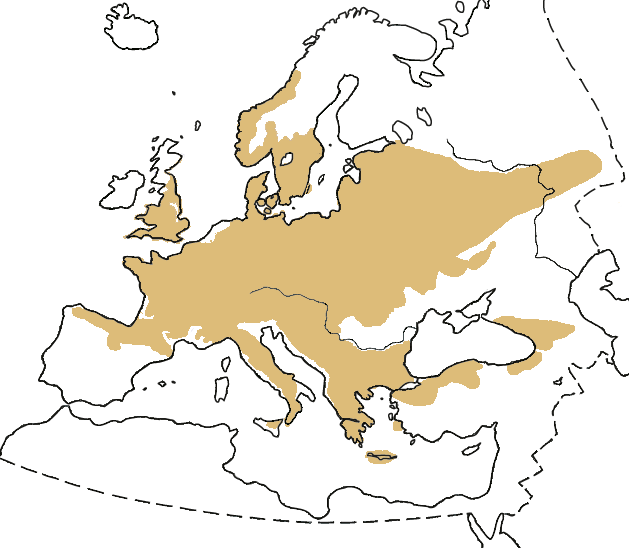 |