
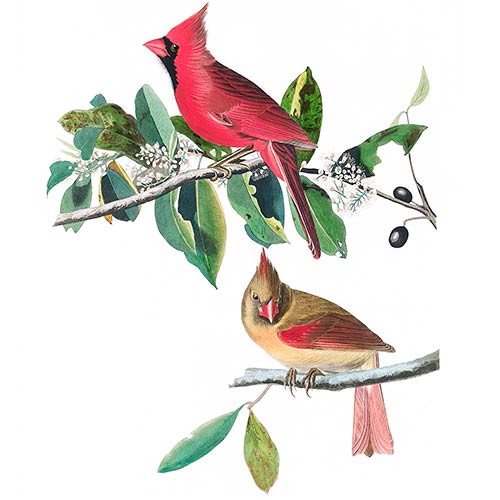
Northern Cardinal
- Free delivery for purchases over 60€ with DHL Parcel Connect
- Delivery within 3-5 working days
- 14 day return policy
- Customer services open weekdays 8:30-17:00 | +46 (0)431 76800 | info@wildlifegarden.se
- 20 years' expertise in designing, producing and delivering artisanal homeware.
- PopulationAntalet uppskattas till 130 miljoner individer och mängden ökar.
- Maximum age:3–5 years in the wild.
- Eggs and clutches:2-5 eggs in one or two clutches.
- Latin name:Cardinalis cardinalis
Description
Description:
All year round, the northern cardinal wears its bright red plumage with a high tassel on its head of the same colour. It's no wonder it's probably the most common bird on Christmas cards or the bird most Americans recognise. It thrives in backyards and groves near people.
Appearance:
Females lack the bright red feathers of males, but both sexes have red beaks and tufts on their heads. The beak is short and coarse, and the tail is long and often points downwards when sitting. It is 20-23 centimetres long.
Similar bird:
The northern cardinal has a relative called the desert cardinal (or pyrrhuloxia) in the southern parts of the United States. Still, neither this nor other birds in the United States with tufts on their heads have the all-red body of the northern cardinal.
Sounds and songs:
Both sexes sing, and the song consists of a long string of short repeated whistles, with a grunt at the end.
Diet:
It often searches the ground for food, where it finds seeds and berries. Insects supplement their diet. It also enjoys sunflower seeds and other seeds from the bird feeder.
Nest:
The nest is built in dense shrubbery or a clump of branches. On the outside, it is braided with small branches, and inside, it is lined with strips of bark and grass.
Geographic range:
The northern cardinal can be found year-round in the eastern half of the United States and a bit down the east coast of Mexico.
 Summer Summer Resident Resident Winter Winter | 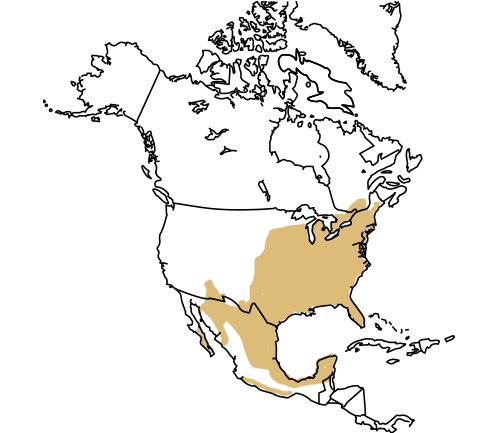 |