
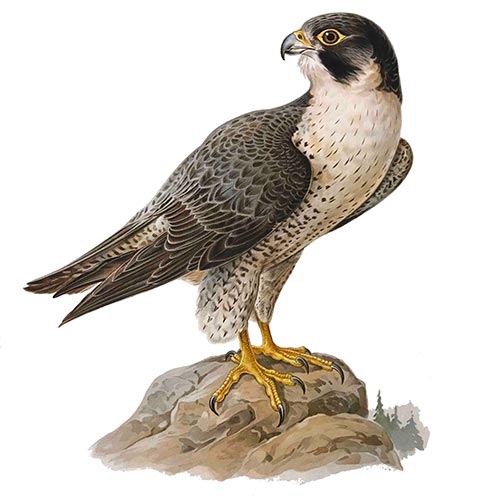
Peregrine falcon
€0
Reaching speeds of up to 200km/h the peregrine falcon is the fastest animal on earth.
- Free delivery for purchases over 60€ with DHL Parcel Connect
- Delivery within 3-5 working days
- 14 day return policy
- Customer services open weekdays 8:30-17:00 | +46 (0)431 76800 | info@wildlifegarden.se
- 20 years' expertise in designing, producing and delivering artisanal homeware.
- Maximum age:17 years
- Eggs and clutches:2 – 4
- Latin name:Falco peregrinus
Description
Reaching speeds of up to 200km/h the peregrine falcon is the fastest animal on earth. This awe inspiring creature was on the brink of extinction in Europé due to agricultural contamination during the 1900s and the increasing popularity of egg collecting. Thanks to intensive captive breeding the population has recovered.
Appearance
Like many other birds of prey the female peregrine is much larger than herm ale counterpart. The male may weigh anywhere between 440 – 750 grams the female can weigh up to 1500 grams. Other than the obvious difference in size the male and female have very similar markings and plumage. The back is dark grey/blue in colouration and the underparts are white and striped. The peregrine falcon har a distinct ’moustache’ from the contrasting dark back and white underparts.Similar birds
May be confused with Gyrfalcon.Calls and song
Normally a very quiet bird but will let out a warning call by it’s nest – a rhythmical hoarse sound rehk – rehk – rehk!Feeding habits
Being a bird of prey the peregrine falcon is a skillful hunter. It catch its prey by colliding with it in mid air at speeds of up to 200km/h. Birds the size of a pigeon are on the menu.The nest and hollows
The peregrine falcon is one of the most adaptive birds of prey and cak live in just as well in the desert as in the arctic tundra. Their adaptive behaviour means that they have even started to move major cities – building their nests on the ledges of skyscrapers.Distribution
 Summer Summer Resident Resident Winter Winter | 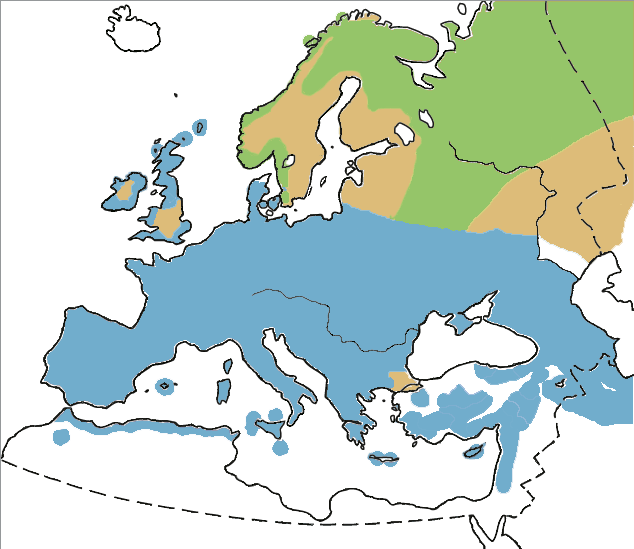 |