
Rainbow Lorikeet
- Free delivery for purchases over 60€ with DHL Parcel Connect
- Delivery within 3-5 working days
- 14 day return policy
- Customer services open weekdays 8:30-17:00 | +46 (0)431 76800 | info@wildlifegarden.se
- 20 years' expertise in designing, producing and delivering artisanal homeware.
- PopulationOne of Australia's most common birds and not considered threatened.
- Maximum age:Rainbow lorikeets can live up to 20 years in the wild, 30 years in captivity.
- Eggs and clutches:1-3 eggs
- Latin name:Trichoglossus moluccanus
Description
Description
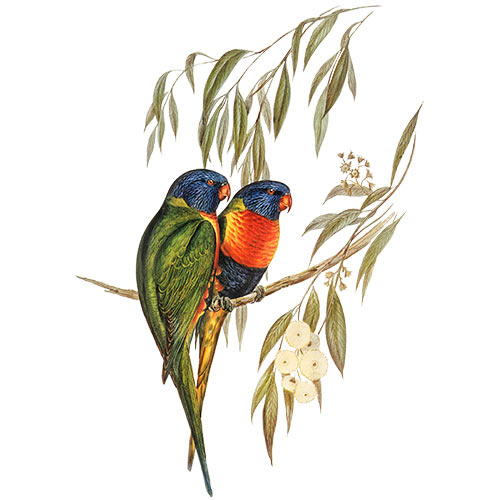
The rainbow lorikeet is an explosion of bright colours. It originated in the Australian rainforest but often lives among people in towns and villages. In the morning and evening, it gathers in large, noisy flocks. In captivity, it can learn to speak.
Appearance
A medium-sized parrot, between 26 and 30 centimetres long. Both sexes have the same bright colours: a bright red beak and chest and a blue head and belly. Its back and long tail are green. It has a long tongue with small barbs on it, which allows it to suck nectar and pollen.
Similar bird
There are several lorikeet species, with slight differences in plumage, but the rainbow loricate is the largest. It is similar to the coconut lorikeet but does not have a blue belly.
Sounds and songs
A cackling babble with melodic elements.
Diet
Nectar, berries and fruits. It is not popular with fruit growers as it often causes great damage to crops.
Nest
The rainbow lorikeet lives in tree cavities. The nest is lined with grass and wood chips.
Geographic range
The rainbow lorikeet is common in the northern, eastern, and south-eastern coastal strip of Australia.
 Summer  Resident  Winter | 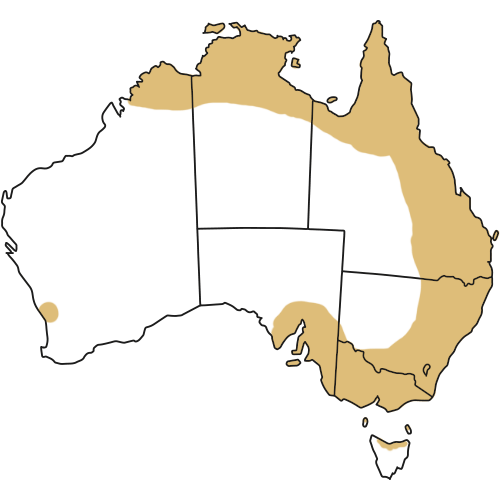 |