
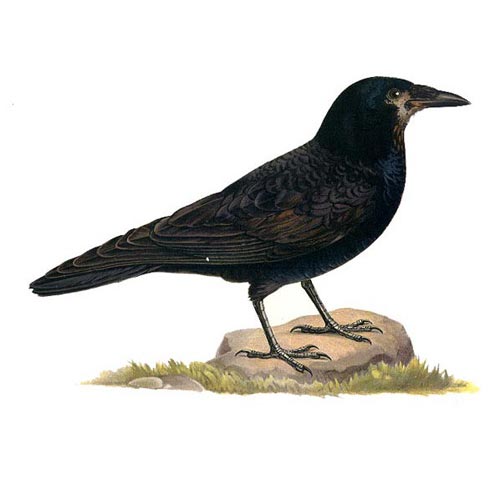
Rook
€0
In the mid-50s the rook was severely plagued by pesticides used within agriculture.
- Free delivery for purchases over 60€ with DHL Parcel Connect
- Delivery within 3-5 working days
- 14 day return policy
- Customer services open weekdays 8:30-17:00 | +46 (0)431 76800 | info@wildlifegarden.se
- 20 years' expertise in designing, producing and delivering artisanal homeware.
- Maximum age:20 years
- Eggs and clutches:Incubation 16-20 days. 3 - 4 eggs
- Latin name:Corvus frugilegus
Description
In the mid-50s, the rook was severely plagued by pesticides used in agriculture. The numbers decreased in the UK, and many colonies disappeared. However, because of changed rules regarding biocide use, the strain of rooks has stabilised again. The rooks live in a lifelong partnership in colonies as small as a couple of pairs or as large as about 50.
All-round feeder, both vegetarian and animal. Essential parts of its diet are worms, snails, potatoes and trash.
Appearance
It is as large as a crow but completely black with a metallic gleam. Has a conspicuous bare greyish white skin area around the beak.Similar bird
Large and glistening black with a long beak; a greyish white naked base on many birds.Sounds and song
Reminds of the crow, but hoarser and coarser. May also burr like a raven.Food and bird tables
Rarely seen at the table.All-round feeder, both vegetarian and animal. Essential parts of its diet are worms, snails, potatoes and trash.
The nest and hollows
The nest looks like a crow’s nest but more loosely assembled. Nests in treetops as a part of a colony.Distribution
 Summer Summer Resident Resident Winter Winter | 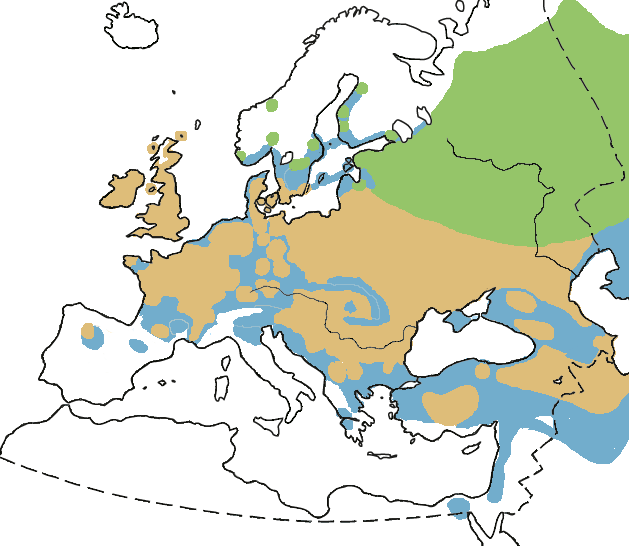 |