
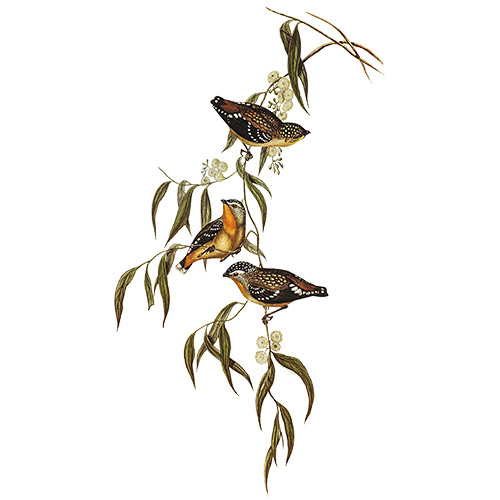
Spotted Pardalote
- Free delivery for purchases over 60€ with DHL Parcel Connect
- Delivery within 3-5 working days
- 14 day return policy
- Customer services open weekdays 8:30-17:00 | +46 (0)431 76800 | info@wildlifegarden.se
- 20 years' expertise in designing, producing and delivering artisanal homeware.
- PopulationThe population is declining, but is not considered endangered.
- Eggs and clutches:3–5 eggs in a pair of clutches.
- Latin name:Pardalotus punctatus
Description
Description
With a bit of luck, this beautiful little bird can be seen high up in the trees in southern and eastern parts of Australia.
Appearance
It has a small spool-shaped body (8-10 centimetres) with a very short tail and beak, yellow bib and yellow-brown belly and a white eyebrow line. It is the white dots on the top of the head and back that make it also called 'diamondback'. The male has a red patch on his tail.
Similar birds
It has a close pardalot relative with a similar appearance and stripes on the head. However, only the spotted pardalot has round white dots.
Sounds and songs
A soft but penetrating whistle with repeated double strokes.
Diet
It feeds on small insects and plant juices and prefers to forage in eucalyptus trees.
Nest
The spotted pardalote digs a tunnel underground for its nest and feeds it with bark strips. It prefers to nest near a riverbank.
Distribution
Southern and Eastern Australia
 Summer Summer Resident Resident Winter Winter | 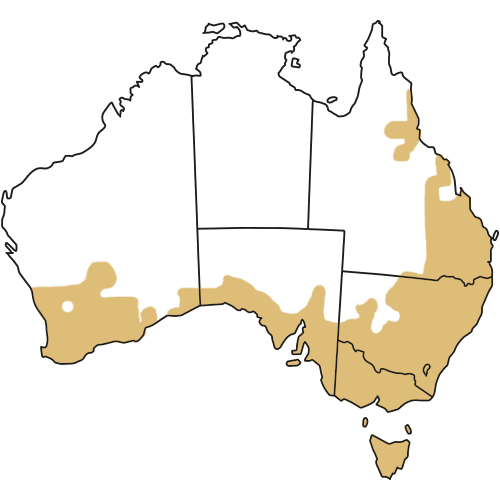 |