
Starling
€0
Starlings gather in large numbers on common sleeping sites, such as widely stretched reeds, trees or house fronts.
- Free delivery for purchases over 60€ with DHL Parcel Connect
- Delivery within 3-5 working days
- 14 day return policy
- Customer services open weekdays 8:30-17:00 | +46 (0)431 76800 | info@wildlifegarden.se
- 20 years' expertise in designing, producing and delivering artisanal homeware.
- Maximum age:22 years
- Eggs and clutches:Incubation two weeks. 4 - 6 eggs
- Latin name:Sturnus vulgaris
Description
Starlings gather in large numbers on common sleeping sites, such as widely stretched reeds, trees or house fronts. In London, the numbers of starlings that stay for the winter have been estimated at 3 million! On the largest sleeping sites more than 50 000 birds stay the night. In likeness with so many other birds with familiar sounds, the starling was also considered a reliable weather forecaster. When he let out his soft, fluty whistle, people were certain it was going to rain.
Appearance
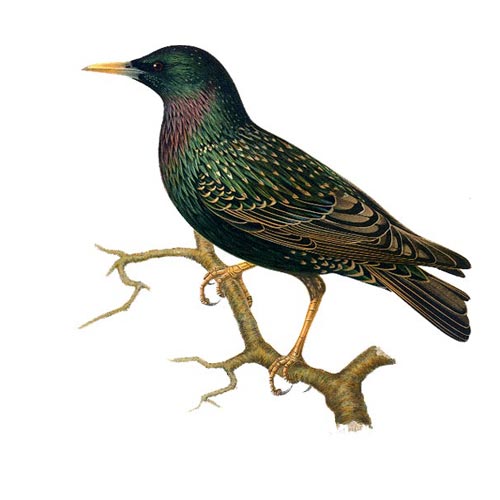
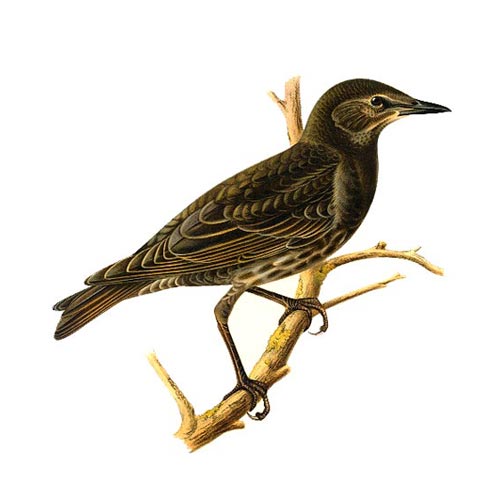
Has a heavy body, a large head with a long yellow beak and a short tail. The plumage is black with a strong metallic gleam of green, blue and violet, with small white spots.Similar bird
The blackbird has a longer tail and no small spots on its black coat. The starling walks rapidly across the lawn whereas the blackbird takes a few cautious steps, stops, and then continues.Sounds and song
The flight call is a typical warble, and the song is very varied and consists of high, fluty notes, whistling, humming, squeaking, clicking etc.| Song | Contact Call |
Food and bird tables
Lives off insects and their larvae, worms, snails as well as various berries, fruits and seeds.The nest and hollows
Lives in tree hollows and likes nesting boxes. It was the people of India who invented the nesting box, and it was through the Orient that the boxes were brought to Europe at the end of the 18th century.Distribution
 Summer Summer Resident Resident Winter Winter | 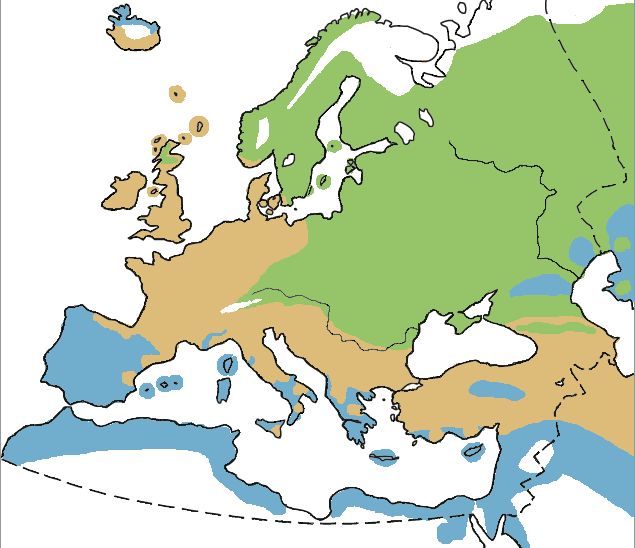 |