
White Wagtail
- Free delivery for purchases over 60€ with DHL Parcel Connect
- Delivery within 3-5 working days
- 14 day return policy
- Customer services open weekdays 8:30-17:00 | +46 (0)431 76800 | info@wildlifegarden.se
- 20 years' expertise in designing, producing and delivering artisanal homeware.
- Maximum age:12 years
- Eggs and clutches:Incubation 12 -13 days. 5 - 8 eggs, often two clutches.
- Latin name:Motacilla alba
Description
Wagtails usually forage alone, although small groups may gather during migration. At dusk, they often roost together, with larger flocks assembling at regular sleeping sites.
Appearance
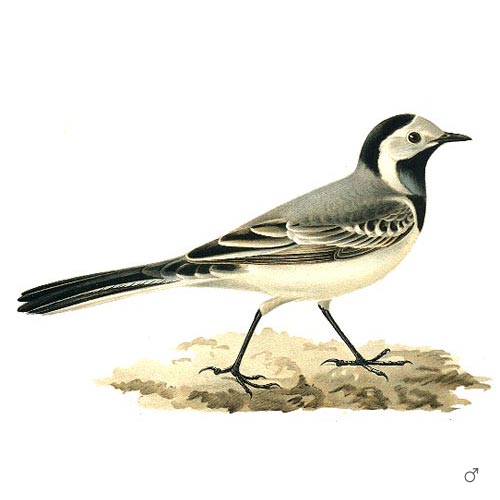
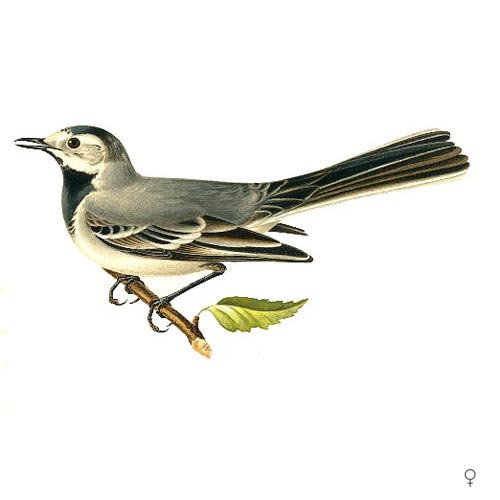
A slender blue-grey bird with a long, constantly wagging tail, white face, and dark eye. It moves quickly across the ground in search of insects, bobbing its head as it walks on thin, delicate legs.
Similar bird
Easy to recognise by its long wagging tail and crisp grey, black, and white plumage. Often seen hurrying across lawns, roads, and open ground.
Sounds and song
Its call is a sharp, two-syllable “tsilip” or “chisick”. The song is light and twittering, often mixed with repeated calls.
| Song |
Contact Call |
Food and bird tables
The wagtail feeds mainly on insects and other small invertebrates. It is often seen following tractors or grazing animals to catch insects and worms disturbed from the ground.
The nest and nesting places
The female builds the nest in sheltered spots such as crevices, ledges, wood piles, or occasionally nest boxes. A roof or cover above the nest is usually important. Wagtails are adaptable nesters and have even been known to raise chicks aboard ships during long sea journeys.
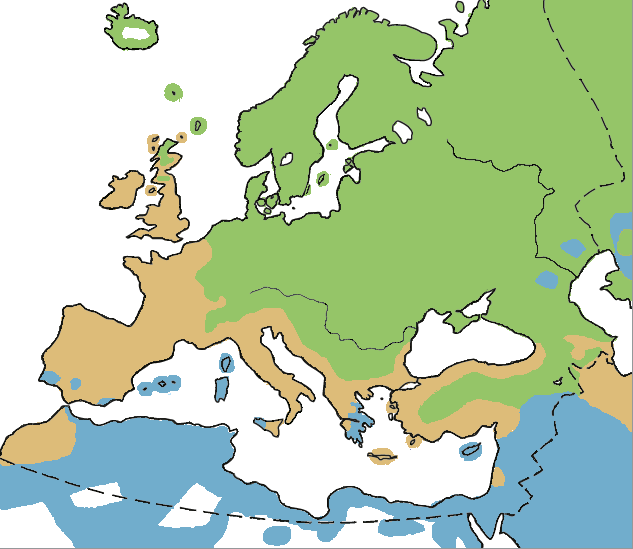
Distribution
 Summer  Resident  Winter |
 |