
Holly Blue
€0
The Holly Blue overwinters a pupa. It hatches in the spring and is one of the first butterflies we can see.
- Free delivery for purchases over 60€ with DHL Parcel Connect
- Delivery within 3-5 working days
- 14 day return policy
- Customer services open weekdays 8:30-17:00 | +46 (0)431 76800 | info@wildlifegarden.se
- 20 years' expertise in designing, producing and delivering artisanal homeware.
- Latin name:Celastrina argiolus
Description
(Celastrina argiolus)
Did you know that
The Holly Blue overwinters a pupa. It hatches in the spring and is one of the first butterflies we can see. The Holly Blue is a common butterfly and a frequent visitor to gardens and parks, where it flies slowly around in the sun about one metre above the ground.
Back to Butterfly School
Did you know that
The Holly Blue overwinters a pupa. It hatches in the spring and is one of the first butterflies we can see. The Holly Blue is a common butterfly and a frequent visitor to gardens and parks, where it flies slowly around in the sun about one metre above the ground.
Geographical distribution
The Holly Blue can be seen throughout almost the entire northern hemisphere.Appearance
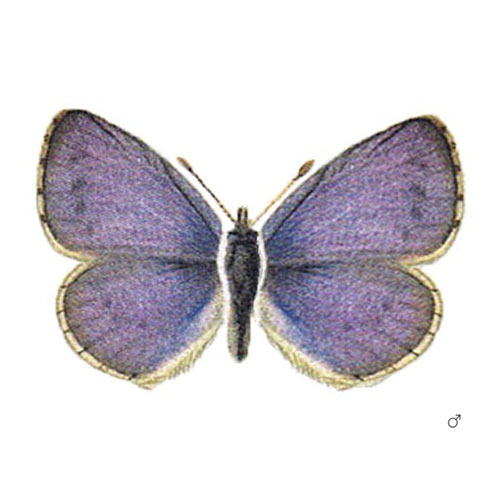
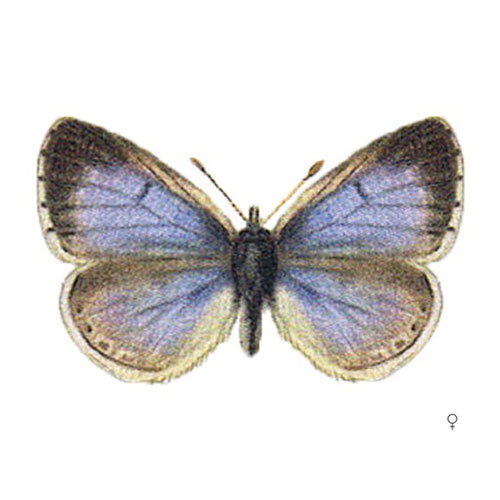
The upper side of the wings of both sexes is blue, although the females are slightly paler in colour than the males. There is a black band on the tips of the wings, which is clearer on females than males. The underside of the wings is a paler blue with white patches.Similar butterflies
Several of the Lycaenidae butterflies are similar, but the Holly Blue can be distinguished by its black wingtips and pale underside.Life cycle
The female lays its eggs one by one on the host plants, preferably on a bud in the sun. The eggs hatch after about four days. The larvae feed on the host plants where they were born. After three weeks they become pupae. Two generations of Holly Blue are born every year. The first generation of butterflies come from pupae that have been in hibernation all winter. They hatch in April and live until the end of June. The second generation is hatched in late July or early August after having been pupae for about two weeks.Back to Butterfly School