
Large White
€0
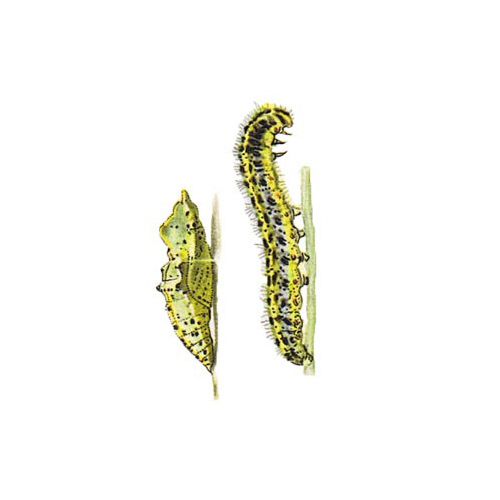
The larva of the Large White are hungry and can decimate cabbages to the point that only the stalks remain, making them unpopular in the garden.
- Free delivery for purchases over 60€ with DHL Parcel Connect
- Delivery within 3-5 working days
- 14 day return policy
- Customer services open weekdays 8:30-17:00 | +46 (0)431 76800 | info@wildlifegarden.se
- 20 years' expertise in designing, producing and delivering artisanal homeware.
- Latin name:Pieris brassicae
Description
(Pieris brassicae)
Did you know that
The larva of the Large White are hungry and can decimate cabbages to the point that only the stalks remain, making them unpopular in the garden.
Back to Butterfly School
Did you know that
The larva of the Large White are hungry and can decimate cabbages to the point that only the stalks remain, making them unpopular in the garden.
Geographical distribution
The species is common throughout most of Europe, but is becoming increasingly rare the further north you get.Appearance
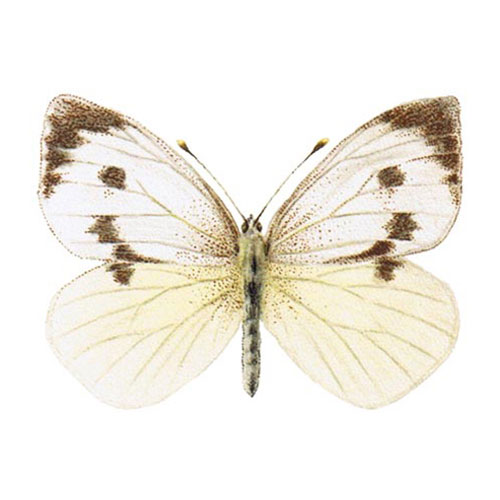
The wings are a pale yellowish-white, almost translucent, with black tips on the forewings. The female has two black spots on each forewing, making it possible to distinguish the male and the female. The underside of the wings of both the males and females is slightly more yellow.Similar butterflies
The Small White is a smaller copy of the Large White. It has the same appearance but a smaller wingspan.Life cycle
The Large White always overwinters as pupa and there are often two generations of this species in one year. The first generation overwinter as pupae and become butterflies in the spring. These lay eggs that turn into butterflies in July. The second generation lays eggs at the end of the summer. The pupae then rest during the winter and are hatched in the spring. Sometimes, however, the pupae have time to become adult butterflies, making them the year’s third generation of Large Whites.Back to Butterfly School