
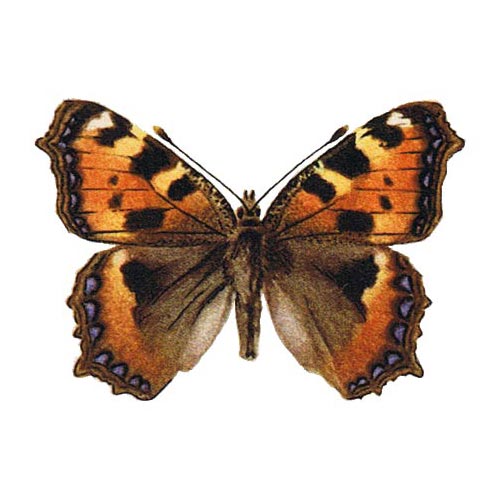
Small Tortoiseshell
€0
The Small Tortoiseshell is one of the most common butterflies in Europe and regularly frequents gardens.
- Free delivery for purchases over 60€ with DHL Parcel Connect
- Delivery within 3-5 working days
- 14 day return policy
- Customer services open weekdays 8:30-17:00 | +46 (0)431 76800 | info@wildlifegarden.se
- 20 years' expertise in designing, producing and delivering artisanal homeware.
- Latin name:Nymphalis urticae
Description
(Nymphalis urticae)
Did you know that
The Small Tortoiseshell is one of the most common butterflies in Europe and regularly frequents gardens. The male tries to attract the female by flying after her and ”drumming” his antennae on her hind wings.
Back to Butterfly School
Did you know that
The Small Tortoiseshell is one of the most common butterflies in Europe and regularly frequents gardens. The male tries to attract the female by flying after her and ”drumming” his antennae on her hind wings.
Geographical distribution
This butterfly can be seen all across Europe and in warmer parts of Asia.Appearance
The wings have an orange base with beautiful black and yellow markings. Along the edge of the wings, there is a band of bluish-grey and black markings. The underside of the wings are more discrete however, with brown and grey mottled markings that act as excellent camouflage among old leaves and the bark of trees. Hungry birds are deterred by the brightly coloured wings, believing the butterfly to be poisonous. Males and females have the same appearance.Similar butterflies
The Comma is similar to the Small Tortoiseshell in terms of colour, but has different markings and patterns.Life cycle
The Small Tortoiseshell flies in two generations and overwinters as an adult butterfly. The male spends the afternoon looking out for a female to court. When he sees one, he flies after her and tries to get close enough to ”drum” his antennae on her forewings. The female flies a short distance and the male follows and continues to drum. This drumming sound is actually audible if you are close enough. This courtship can go on for several hours until they start mating. The male and the female then remain coupled until the following morning.Back to Butterfly School