
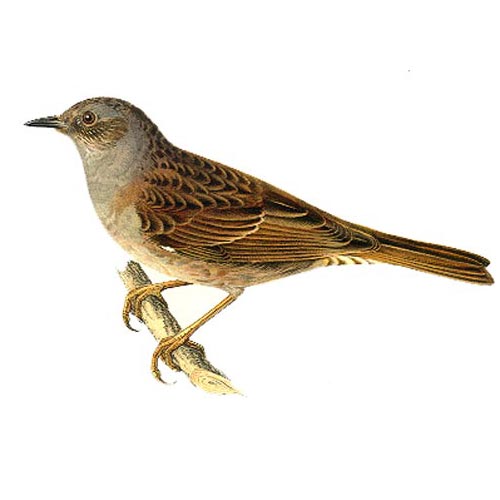
Dunnock
€0
The female is often courted by several males, and therefore it is common for the chosen male to peck the female several times in the rump before the mating.
- Free delivery for purchases over 60€ with DHL Parcel Connect
- Delivery within 3-5 working days
- 14 day return policy
- Customer services open weekdays 8:30-17:00 | +46 (0)431 76800 | info@wildlifegarden.se
- 20 years' expertise in designing, producing and delivering artisanal homeware.
- Maximum age:11 years
- Eggs and clutches:Incubation two weeks. 3 - 6 eggs, usually two clutches
- Latin name:Prunella modularis
Description
The female is often courted by several males, and therefore it is common for the chosen male to peck the female several times in the rump before the mating. This pecking triggers a reflex in the female that expels any sperm from a rival. This way, the male ensures that he alone is the father of the brood.
In the winter, the dunnock will feed on small seeds, but in the summer, its diet is comprised of small beetles, larvae, pupae, spiders and worms.
Back to bird school
Appearance
Males and females look the same, with blue-grey chests and heads and a deep dark brown back with black lines. The dark, thin beak is characteristic of the dunnock.Similar bird
Speckled brown like a sparrow. A thinner beak than the house sparrow and a leaden grey on its breast.Sounds and song
The song is short and crystal clear as opposed to the robin’s ripple. The flight call is a metallic sound.| Song |
Food and bird tables
Rarely seen at the bird table.In the winter, the dunnock will feed on small seeds, but in the summer, its diet is comprised of small beetles, larvae, pupae, spiders and worms.
The nest and hollows
The female builds the nest and places it close to the ground, hidden in tight thickets. The nest itself is a bowl of blades covered in moss and lined with hair and feathers.Distribution
 Summer  Resident  Winter | 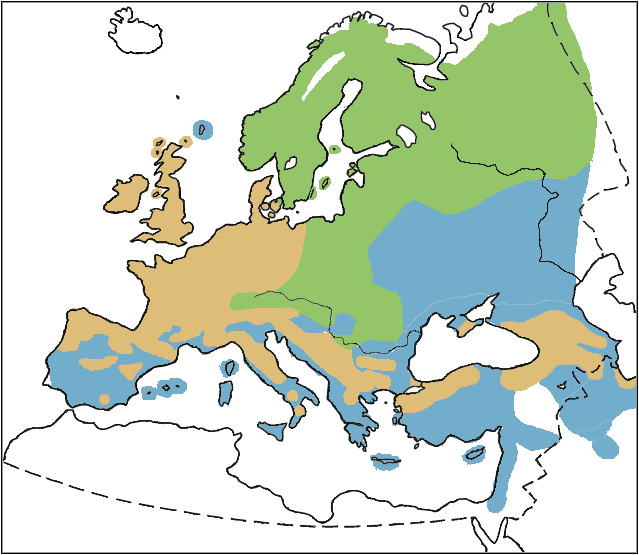 |
Back to bird school