
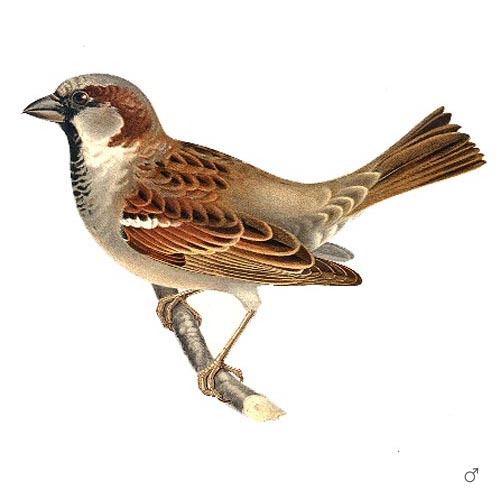
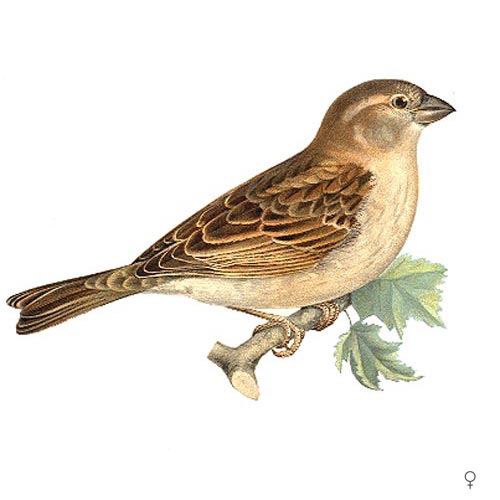
House sparrow
€0
The house sparrow used to be common all over UK but its numbers have been heavily decimated, most likely because of modern agriculture.
- Free delivery for purchases over 60€ with DHL Parcel Connect
- Delivery within 3-5 working days
- 14 day return policy
- Customer services open weekdays 8:30-17:00 | +46 (0)431 76800 | info@wildlifegarden.se
- 20 years' expertise in designing, producing and delivering artisanal homeware.
- Maximum age:19 years
- Eggs and clutches:Incubation almost two weeks. 4 - 6 eggs, two to three clutches a year
- Latin name:Passer domesticus
Description
The house sparrow used to be common all over UK but its numbers have been heavily decimated, most likely because of modern agriculture. These social birds need a certain amount of relatives in their general area to be stimulated into breeding. If there are not enough house sparrows in a particular area, the population is simply not great enough for breeding.
Seeds, fruits and insects.
The house sparrow partners for life but breeds in large colonies. This bird stays the winter – when a couple has established a certain area as their own they will normally stay there for the remainder of their lives. The house sparrow builds loose and sloppy nests from coarse blades which are then lined with straw, wool, feathers and hair.
Appearance
The male is often mistaken for the tree sparrow but stands out because of its larger size, bulkier body, grey crown and the missing black cheek spot. The female and young birds have a faint, light grey abdomen.Similar bird
The tree sparrow has a completely brown crown and a black spot on a whitish cheek.Sounds and song
The song consists of monotonous sounds that are calmly made in a variety of tones. The chattering song can be heard all year round.| Song | Song |
Food and bird tables
Common guest at the bird table.Seeds, fruits and insects.
The nest and hollows
Likes to nest in hollows.The house sparrow partners for life but breeds in large colonies. This bird stays the winter – when a couple has established a certain area as their own they will normally stay there for the remainder of their lives. The house sparrow builds loose and sloppy nests from coarse blades which are then lined with straw, wool, feathers and hair.
Distribution
 Summer Summer Resident Resident Winter Winter | 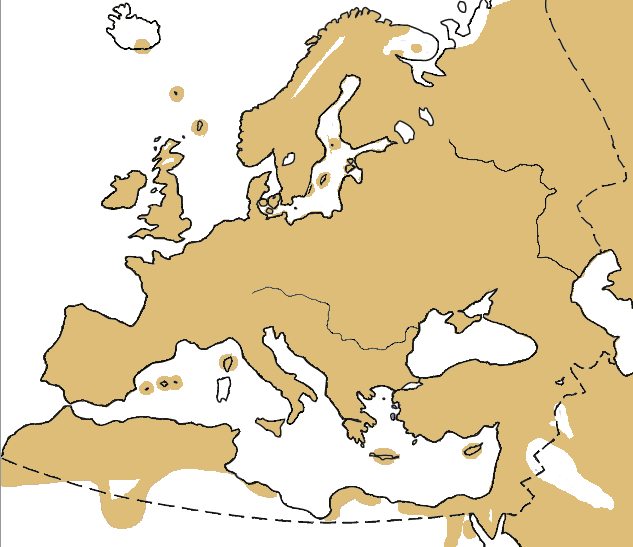 |